
With the right evidence and the right partnerships, we can protect millions of children from exposure to a dangerous toxin. As we mark this year’s International Lead Poisoning Prevention Week, the WHO’s annual call to action on lead, we express our gratitude to the leaders and advocates who make this work possible.
From academics to civil society leaders to government officials to manufacturers, these Lead Elimination Heroes provide critical partnership in our mission to eliminate lead poisoning at the source.
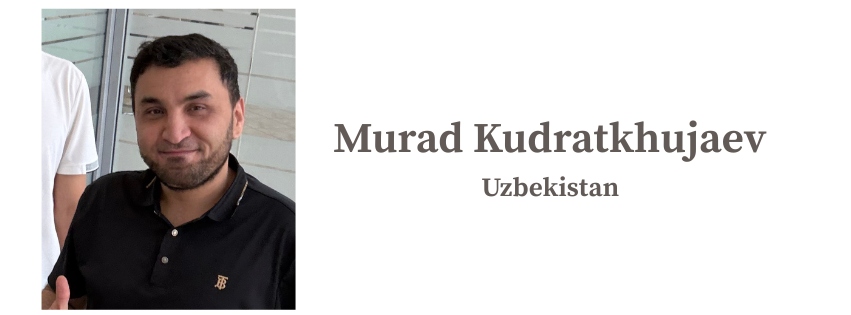
In Uzbekistan, Murad Kudratkhujaev is Hayat’s Quality Manager. In this role, he led the company’s reformulation of 31 million litres a year of previously leaded paint, welcoming LEEP to support the company through the process.
Murad studied paints and coatings technology in Tashkent and worked as a chemist before joining Hayat in 2022. He is increasingly an advocate for lead alternatives in public and industry circles, and has been critical to our progress in removing lead paint from the market in Uzbekistan.
_________
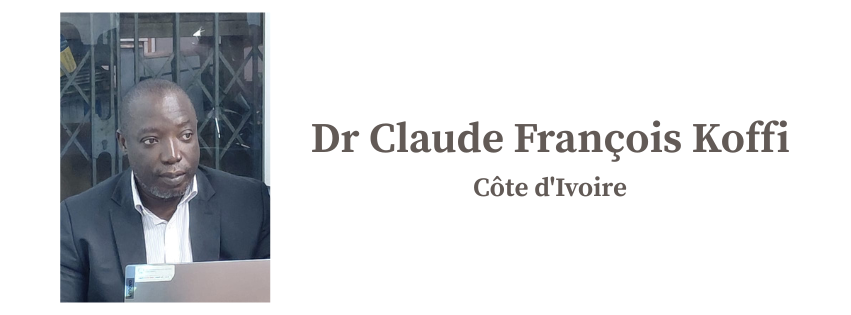
“Lead in paint is a preventable danger. Côte d’Ivoire has chosen to protect its children and to align with its ECOWAS commitments.” – Dr Claude François Koffi
As Deputy Director for Health and Environment at Côte d’Ivoire’s Ministry of Health and Public Hygiene, Dr Koffi has been a key partner for LEEP for many years.
Our staff say he is always available, passionate about the issue of lead, and a committed advocate for action.
Dr Koffi championed an interministerial order setting a 90 ppm limit for lead in decorative paints. He carried the technical dossier through the ministry’s regulatory process, from his directorate through legal review to this month’s signing by the Minister of Health. This opens the way for signatures from the Ministries of Environment, Commerce, and Construction, which have been involved from the start and are expected to follow quickly.
LEEP’s work in Côte d’Ivoire has the potential to protect more than 1.9 million children from lead exposure in their homes.
_________
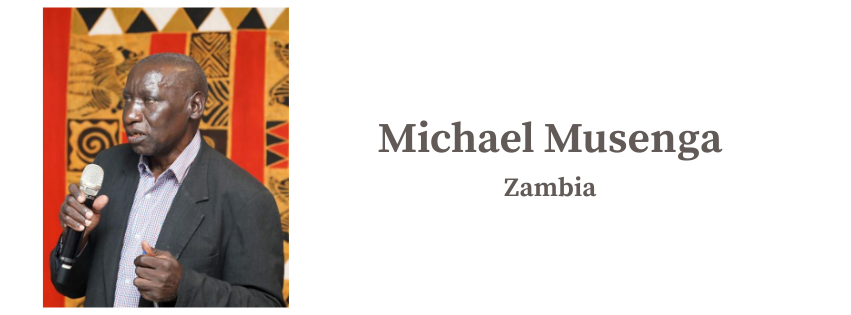
For more than 15 years, Michael Musenga has advocated for lead elimination in Zambia.
Through the Children’s Environmental Health Foundation, Michael has campaigned to raise awareness of the harms of lead poisoning and convened multi-sectoral workshops to accelerate regulatory control of lead paint.
As National Lead Elimination Advisor, he has played a key role in supporting the Government of Zambia to end childhood lead poisoning. He championed the gazetting of voluntary standard ZS1185, which sets a 90 ppm limit for lead in paint, and has run countless community events across the country to raise awareness of lead’s toxicity.
_________
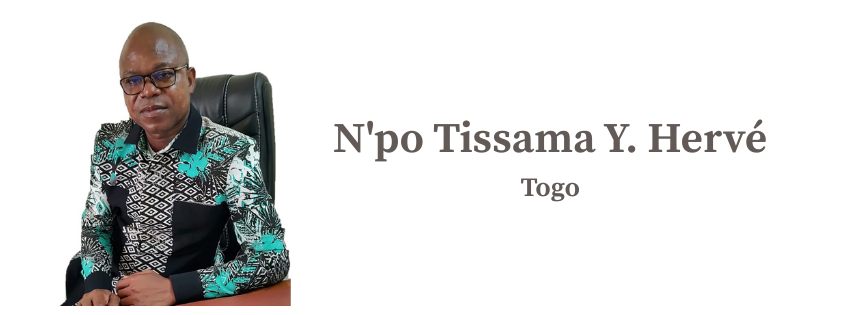
As the focal point for lead in paint at Togo’s Ministry of Environment, N’po Tissama Y. Hervé coordinated the process that took the government from consultation to a final draft interministerial order on lead in paint. The order sets a limit of 90 ppm and is awaiting final signatures.
LEEP is honored to support Togo in this effort, and we are grateful for N’po’s consistent follow-up, which has kept the process moving.
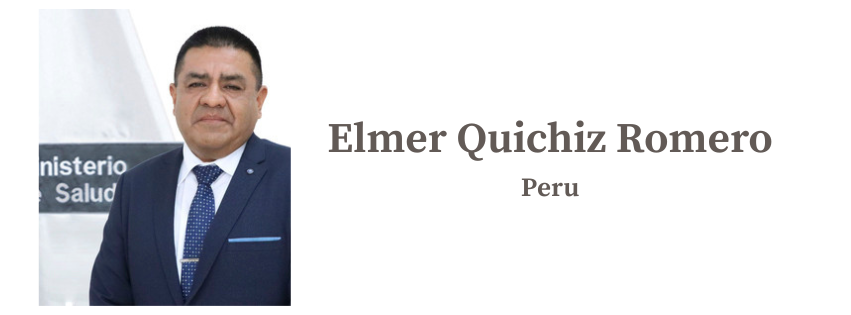
As the Executive Director of Peru’s General Directorate of Environmental Health and Food Safety (DIGESA), Elmer has helped advance Peru’s efforts to eliminate lead exposure by strengthening the government’s work on lead paint regulation and its implementation. He has served as LEEP’s primary point of contact since 2024 and has helped raise awareness of the issue of lead. Elmer has even shared lessons learned from Peru in other Latin American countries where LEEP has programs.
He engages with the practical questions that decide whether a regulation delivers results: who is responsible, how inspections and testing will work, and what authorities need to act.
His work is helping build the capacity, coordination, and accountability needed to turn Peru’s lead paint limits into lasting protection for public health.
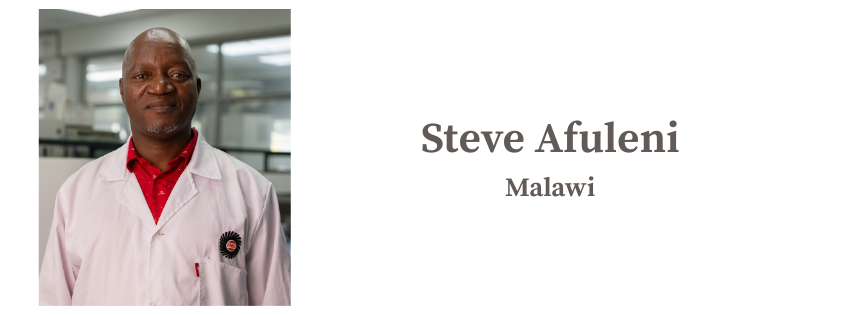
“The Malawi Bureau of Standards is there to protect the consumer… We believe that, in the near future, the lead will not be present in the paint anymore.” – Steve Afuleni, Deputy Director of Testing
In 2021, LEEP purchased and tested paints available on the local market in Malawi and found that brands representing 89% of the market share contained high levels of lead in their paints.
Since then, we have worked with Steve Afuleni and the Malawi Bureau of Standards to build their capacity to test paint for lead and enforce the relevant regulations.
As a result of our partnership, the share of brands using lead-based materials has fallen dramatically – from 89% to 4% in the most recent follow-up. Watch Steve share his story in this video.
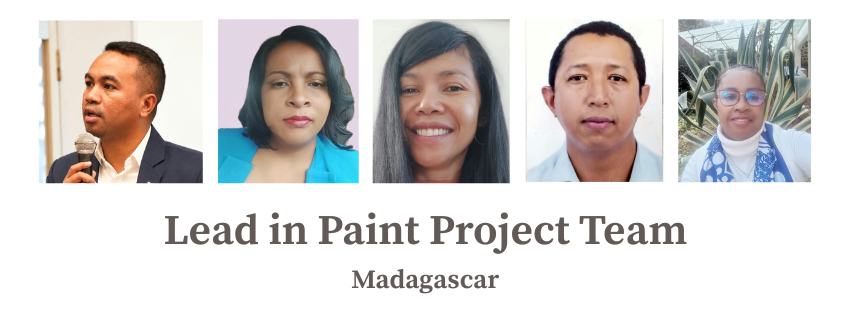
From the start of our work in Madagascar, LEEP has partnered with the Lead in Paint Project team in the country’s Ministry of Environment and Sustainable Development (MEDD).
LEEP supported the team, led by Rila Albani Rakotomanana (pictured above on left), as they drafted Madagascar’s decree regulating lead in paint and carried it through the full government process. The legal team prepared and translated the text, while the technical team built the evidence base.
In September 2026, the Council of Government approved the decree, and several major paint manufacturers have already switched to lead-free paint. Once adopted, the decree will require every manufacturer and importer to comply with the legal limit on lead in paint.
“This decree is the result of real teamwork between lawyers, technical experts, and partners. Our next challenge is enforcing it on the ground.” – Rila Albani Rakotomanana
Thank you to Rila and the full team: Tovohasina Fandrosea Randresiarison, Miarisoa Natalyh Hasina Samoela, Lalaina Nathalie Randriamamory, and Zafiarimananirina Ursile Alphonsine Razanantsoa.
LEEP’s work in Madagascar has the potential to protect 2 million children from lead exposure in their homes.
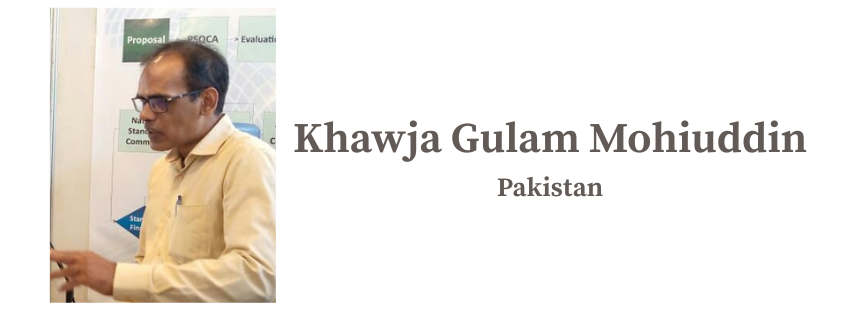
As the Assistant Director (Technical) at the Pakistan Standards and Quality Control Authority (PSQCA), Khawja Gulam Mohiuddin has been a key partner for LEEP since we first began working in Pakistan in 2021.
In addition to leading on enforcement, he has advised our team on standards, regulation, and manufacturer engagement. Because of his support, we conducted our first paint study in Pakistan and engaged extensively with the country’s large manufacturers.
As a result of our partnership, Pakistan’s lead paint market share has been cut in half – from about 88% in 2021 to 41% in 2024, protecting an estimated 8 million children from lead exposure in their homes. He also supported the revision of the mandatory standard from 100 ppm to 90 ppm in 2023.
As a former Deputy Director of the South Asian regional standards body (SARSO), Khawja has long championed safe consumer products and regional standards for chemicals.
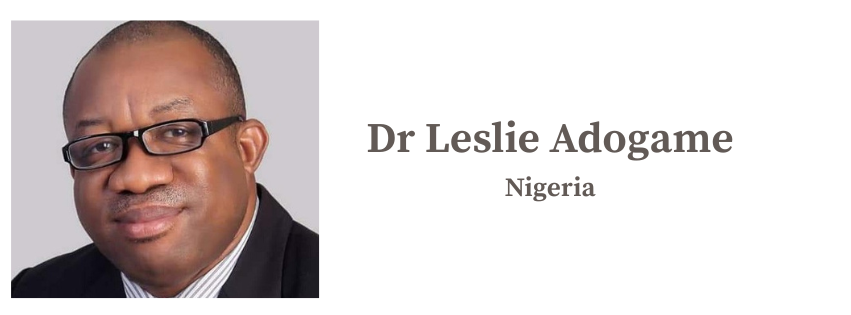
Dr Leslie Adogame, Executive Director of SRADeV Nigeria, has spent more than a decade tackling lead exposure in Nigeria. Under his leadership, SRADeV ran one of the country’s first lead paint studies in 2016 and has worked with policymakers and industry ever since to get lead out of paint.
In his three years of partnering with LEEP, Dr Adogame led SRADeV to help secure the gazetting of Nigeria’s National Environmental (Chemicals and Pesticides) Regulations, 2023, which include the country’s lead paint law. He and his team also played a key role in reviewing and updating the national lead in paint standard. In 2025, SRADev brought 33 small paint manufacturers to the West Africa Coatings Show to meet suppliers of lead-free raw materials, and they mapped the national supply chain for lead-free materials.
SRADeV and LEEP are now implementing a Partnership Framework for a Lead-Free Nigeria (2026-28), which brings together government, industry, health, and consumer protection stakeholders to strengthen regulation and scale up reformulation.
We are grateful for Dr Adogame’s leadership toward a lead-free future for the children of Nigeria.